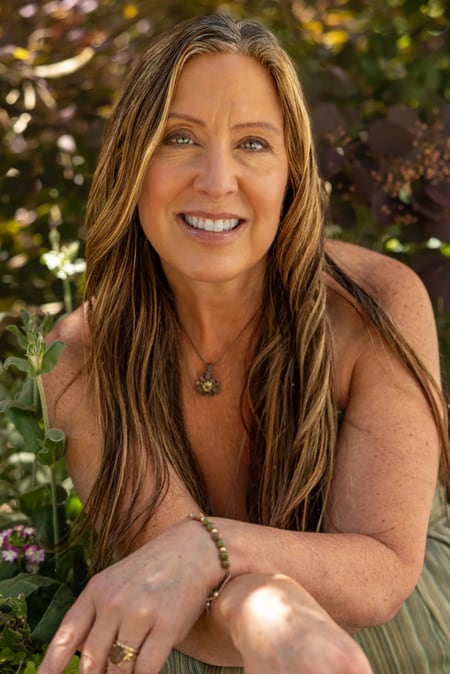
Maybe you have breast implants and you are not feeling like yourself. Strange allergies. Fatigue that will not lift. Brain fog. Histamine reactions that come out of nowhere. A body that has become oversensitive to everything around you, scents, cleaning products, shampoos, skin products, detergents, soaps, foods. Temperature swings that do not make sense. Mood changes that seem to come out of nowhere. An immune system that reacts to more and more as time goes on. All of it connected, even when no one around you can see how. You have been told it is not related. You wonder if you are wrong to think it is. Maybe you have already searched breast implant illness, or BII, and found your own symptoms staring back at you.
You are not wrong. I lived this too.
This is not only for women who already have implants. It is for the mom weighing a lift after having children, and for the young woman chasing an image she has built in her mind. An implant is rarely just an implant. Sometimes it stands in for something else, confidence we have not found yet, or an insecurity we have not looked at directly. That is okay. We have all been there.
Why I Said Yes at 17
In 1962, the very first silicone breast implant was tested, not on a person, but on a dog named Esmeralda. Her body may have known something before we did. She chewed at her stitches until the implant had to come out.[1] Perhaps she sensed it as foreign, and her immune system was already sending early messages.
I spent 35 years mentally and physically chewing at my own stitches, just more quietly, in my mind's eye.
I was 17 when I got breast implants, the exact age most breast development is naturally complete.[2] My body was still finishing what it was already doing well on its own.
Looking back, it was not about wanting to look like anyone in a magazine. It was an immature teenager making a permanent decision before her brain had finished growing. At 17, I was thinking with my limbic system, the emotional and reward-seeking part of the brain that develops faster than the part responsible for judgment. The part of our brain that weighs long-term consequences, the prefrontal cortex, does not fully mature until around age 25.[3]
I also had a boyfriend at the time. I remember him flipping through one of his magazines, telling me exactly what he liked about the women in the pictures. He was young too, working off his own early drive, and he likely had no idea what his words were doing to me. But I felt small sitting there, instead of proud of who I already was.
I wish my future self could have leaned over in that moment and said: look at you. You are beautiful. You have a curvy dancer's body anyone would be proud of, and your health matters. This is no time to make a decision like this, while you are still finding yourself. Give yourself a chance to mature. Do not gamble on your health.
But I did not have that voice in me yet. I did not have the body confidence that comes with age and with actually knowing who you are.
One more thing stayed with me from around that time. When I was 16, a colleague of my father's, a plastic surgeon, asked me if I had stopped growing. I remember thinking that I had not, and wanting to say no. But I said yes anyway. I wanted the gift, the reward, the better confidence I thought implants would bring.
I can only imagine the pressure young women feel today. In my generation, it was movies like Blue Lagoon and Playboy magazines left on nightstands. Now it is filtered photos, avatars, and AI-generated bodies on social media. The pressure has not gone away. It has only changed shape.
My mom was proud of how the surgery turned out. My dad was a physician, and she wanted to show him the great job his colleague had done. She looked at me and said, they look amazing. Those words meant everything to me at the time. A mother I loved deeply telling me it was a good decision only reinforced that I looked better with implants than without them.
Many women I have talked with since have told me their families threw actual celebrations over their implants. Implant parties. I understand the excitement behind that. But to me, this is a decision that deserves to be personal, and one that should be weighed very carefully, not celebrated like a finish line.
The Symptoms No One Connected
Not long after my implant surgery, I started developing strange allergies and long-lasting fatigue. I even fell into a low mood that did not feel like me at all.
At 26, I noticed a strange gel-like sensation in one breast. My surgeon discussed replacing my implants with safer saline ones instead of removing them completely. I decided that was the route I would choose. Little did I know I was setting myself up for more surgeries down the road. My surgeon told me the original silicone implants had literally come apart in her gloves as she worked to remove them from the pocket under my pectoral muscle. I also chose to go a bit larger this time, even though size was not why I was back in the operating room. I have since learned that many women return for a second surgery simply because they are not happy with their original size, not because anything is medically wrong. In one study looking at exactly that pattern, about two out of three of those women chose to go bigger.[6] That tells me something. Even after enlarging once, most women still were not satisfied. Bigger does not settle the question. It just adds more pressure, more risk, and more compression on the body. Looking back, my choice confirmed something I already half knew. An implant did not solve my confidence. Going bigger did not either. Confidence solves confidence.
My allergies kept building. My reactions to foods, scents, and even cleaning products grew stronger. I started developing raised, itchy welts on my skin, and my breasts would itch even during something as ordinary as weight lifting. My eyes grew puffy. I had joint pain that came and went for no clear reason, and weight that would not budge no matter what I did. My immune system was on high alert, and I did not connect the dots. I have also wondered whether my painful cycles and early fibroids, a sign of estrogen dominance, were another one of those dots. I cannot say for certain, but I think about it.
At 42, one implant ruptured. Because it sat under my chest muscle and was on the smaller side, I did not notice any real difference. I called my surgeon's office, and the administrative assistant told me a rupture like that was not harmful and could be left alone. So I did. That implant stayed ruptured, and the other stayed intact, for the next ten years.
The Day I Finally Said Enough
By 52, the itching in one breast was so severe that I decided to have both implants removed for good.
The pathology results after removal showed xanthomatous inflammation with silicone infiltration. In plain terms, the tissue around my implants was inflamed, and it was coated in silicone that had slowly migrated out through the shell over 35 years, even though mine were saline-filled. I was grateful my implants had been placed under the muscle rather than under the breast tissue itself. With silicone slowly migrating out through the shell, that placement meant it had further to travel before reaching my more delicate breast tissue. That placement can make removal trickier, but according to one experienced US plastic surgeon I learned from, Dr. Chun, who has since retired, a skilled surgeon knows how to remove them safely either way. Online communities, like the Breast Implant Illness groups on Facebook, keep lists of surgeons who are experienced in full en bloc removal, if you are looking for where to start.
When the male surgeon who removed them at age 52 stated that my previous surgeon was known for smaller implants, I remembered wondering what he meant by that. Looking back, I think that comment was its own kind of seed. Bigger is better, even from a professional, even in a room meant to help me heal.
When they removed the ruptured implant, the old saline fluid leaked during surgery. Afterward, I had intense muscle contractions for a few weeks. I turned to different detox methods over time to help my body recover and optimize my health.
Healing like this is not fast, and it should not be. It needs to be a slow journey, or you risk overtaxing your body. I have seen many women try to do everything at once, in a rush to have it all over with. Take your time instead.
After the surgery, my allergies started clearing up. Every year since, I have felt a little better. Healing takes time, but it happens.
What the Research Says About Silicone and Your Immune System
If this sounds like you, here is what I want you to know. Your body is not confused. A 2025 study found that silicone can move into surrounding tissue even without a visible rupture, through slow surface wear or tiny amounts seeping through the shell.[4] Immune cells called macrophages try to clear it out, but they cannot break silicone down. When those cells die, they release the silicone right back into the tissue, which keeps the immune system on alert and the inflammation going.[4] Any implant, whether it sits in your chest or anywhere else in your body, is a foreign object. To think our bodies would not notice and respond would be almost unbelievable. That inflammation does not always stay in one place either. It can affect your thyroid, your energy, and your whole system. Everything in your body is connected.
Think about it this way. If you placed a small, heavy bag against one part of your body for years, would you expect that area to stay perfectly healthy? Most of your breast's lymphatic fluid, 75 to 90 percent of it, drains through the lymph nodes in your armpit.[5] Healthy circulation through those nodes matters, for your immune system and for breastfeeding. I thought about this often over the years I had implants, but I kept pushing the question down. I wish I had listened to that inner voice louder.
I also had several thermograms done. A thermogram is an infrared image that reads skin temperature to show patterns of inflammation, rather than the anatomy itself the way a mammogram or MRI does. Mine showed higher temperatures and inflammation around both breasts and into my armpits. After my implants were removed, my thermograms showed far lower temperature readings in those same areas, which told me the inflammation had eased. It also became easier to sleep at night without feeling hard capsular tissue under my breasts.
I nursed one child. Today, my breasts have settled into a shape that is fuller and softer than before, completely natural, and I love how they look and how they feel.
If you are considering removal, find a surgeon experienced in full en bloc capsulectomy, removing the implant and the entire scar tissue capsule around it together. If any of that capsule is left behind, your body may keep reacting to it.
The Real Root Cause Behind Breast Implant Illness
So many women in breast implant illness groups are scared, and I understand why. Implants are foreign to the body, and for many women, they cause real harm on their own. But how much harm, and how it shows up, often depends on what your body was already carrying. Your genetics, how well you detox, and how easily your body leans toward inflammation all play a role. The implant adds a real load. Whether your body can carry that load without breaking down depends on the physiology you started with.
Every woman I have worked with has thanked me for the information I gave her and the support I offered. I smile every time I hear that, because their health matters to me, and I know it matters to their family too. Most are also surprised to learn that "breast implant illness" is a loaded term. At the root, it means something different for each of us. It can trace back to something like the COMT gene, hormone balance, stress load, toxic burden, insulin resistance, or mitochondrial health. The label is the same, but the underlying cause rarely is.
Today, I guide women personally through the explant journey, from preparing for surgery to healing the body and the mind afterward. Through years of clinical work, alongside other practitioners who see this same journey, and through my own lived experience, I developed the 5 M's to Health™, including a technique I call Brain Looping™ for working through the mindset side of healing. Movement is one of the five, and it goes beyond a gym routine. It means finding ways to move that feel comfortable and fun, movement that actually means something to you. I also teach breast health exercises. They will not lift the breast tissue itself, since breast tissue has no muscle in it, but strengthening the pectoral muscles underneath and improving posture can genuinely create the appearance of a firmer, more lifted chest. If you are considering explant surgery, or you are already healing from one, I would be honored to help guide you through it.
The Question I Wish Someone Had Asked Me at 17
Here is a question I wish someone had asked me at 17. Travel to the end of your life in your mind's eye, and look back. Where would implants fit into that picture? Can you really see them making up a big part of the woman you became? That is an excellent question to ask your subconscious, not just your reflection in the mirror.
If I could say one thing to every young woman reading this, and every mom looking in the mirror after having children, it would be this. I love my body. I wish I had not made a decision at 17 that cost me decades of health. Whatever you are chasing with an implant, it is worth asking first what you are really looking for. You do not need surgery to find it. And if you already have implants, or you are still deciding, that is okay too. We have all been there.
Now I stand in front of the mirror and say the words my father gave me. I am happy, holy, and healthy. I am me. That is where my name comes from, @i.am_lisawatson. At 58, I have truly found myself, and my happiness.
And yes, I touch my breasts every day, and I encourage you to do the same. They are living tissue, not something to hide from or feel ashamed of. Be proud of your body. Set yourself free from that inner critic.
References
- Cronin T, Gerow F. First test of a silicone breast implant on a dog named Esmeralda, 1962. Embryo Project Encyclopedia, Arizona State University.
- Cleveland Clinic. Breast development is usually complete by about age 17.
- Stanford Medicine Children's Health and ACT for Youth. The limbic system, the brain's emotional and reward-seeking center, develops faster than the prefrontal cortex, which is not fully mature until around age 25.
- 2025 study published in Biomaterials found silicone exposure activates immune cells and genes linked to autoimmune conditions, even without implant rupture.
- Anatomical research on breast lymphatic drainage: 75 to 90 percent of breast lymph drains through the axillary (armpit) lymph nodes.
- A small study of women who returned for revision breast surgery due to size dissatisfaction found about two-thirds chose larger implants (source: clinicsinsurgery.com).