Maybe you are watching someone you love slowly change. Maybe it is your mom or your dad. They forget words. They repeat stories. They seem tired, foggy, or not quite themselves. And every doctor visit ends the same way: a new label, a new pill, and no real answers.
Maybe you have a quiet fear for yourself, too. Is this coming for me?
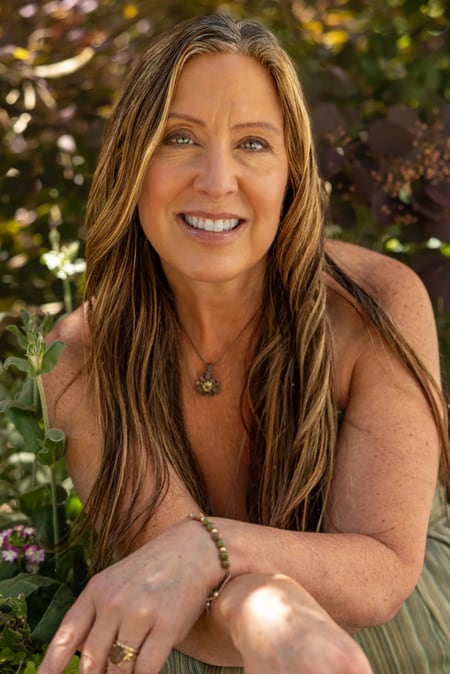
I have been there. This is my mom's story. I am sharing it because I believe it can help you see your own family differently.
My mom, my best friend
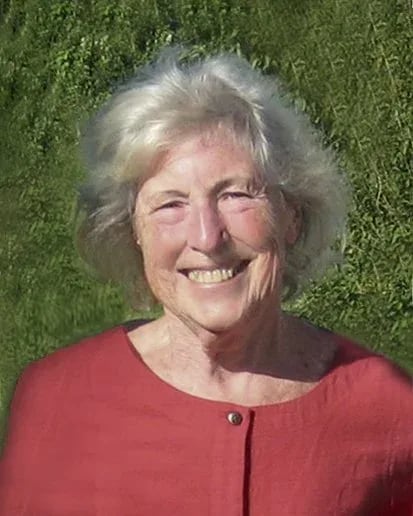
My mom, Joyce, was my best friend. She was a nurse. She spent her life holding the hands of her patients, and she had a gift for making people feel safe.
She also had a fear she carried for years. She was afraid of dementia. She had seen what it does. She had seen how a label can take a whole, beautiful person and shrink them down to one word.
In a moment of clarity, near the end, she said to me, "I don't want to leave you, Lisa."
In the end, her mind and body did leave. I lost my best friend. My son lost his grandmother. My dad lost his wife. Her patients lost a caregiver who loved them.
The symptom I will never forget
Every summer, my son and I went to visit my mom. We did not know how much time we had left with her. We wanted to enjoy her sweet soul for as long as we could.
During one of those visits, my mom was having trouble with her bowels. She was impacted. That means the stool was so hard and backed up that her body could not push it out on its own. She was confused and frightened, like a small child who did not understand what was happening to her body.
She kept saying sorry. I told her not to worry. She had looked after me so many times when I was little. This was the least I could do.
I tucked her into bed that night, but I could not shake what I had seen. She was badly constipated. Her body could not clear out waste, and new medications were adding to her confusion.
Here is what haunts me. Even with all my training, I did not see how serious it was. Looking back, it was an emergency. I wish I had taken her to the hospital that night.
If you are caring for someone older: a sudden change in confusion is a reason to call their doctor. Constipation, infections, and medication changes are common and treatable reasons for it. These causes are easy to miss, so ask about them.
Every chapter, but nobody read the whole story
Today I am a functional medicine practitioner with a focus on health optimization. I also use hypnosis and NLP to help people break the back of old habits, so we can live our lives with freedom. I take a wide lens view of your whole health. When I look back at my mom's health now, I see a pattern I could not see then.
Over her lifetime, she had:
- Allergies, asthma, and eczema as a young person
- Psoriasis
- Poor sleep
- Not drinking enough water
- A "tea and toast" diet, low in protein
- Ongoing constipation and indigestion
- Poor gut motility, which means food moved too slowly through her gut
- An imbalance of gut bacteria, called dysbiosis
- H. pylori (a stomach infection)
- Hashimoto's thyroiditis (an autoimmune thyroid condition)
- Insulin resistance, made worse by no exercise, especially no strength training
- High cholesterol and blood fats that came along with her insulin resistance
- A hysterectomy, with no bioidentical hormone replacement (BHRT) to replace the hormones she lost
- Depression, hair loss, and always feeling cold
- A severe seafood intolerance
- Energy that kept getting worse
- Brain fog that kept getting worse, and finally dementia
Each problem got its own appointment. Each one got its own pill. But nobody stepped back and asked, "How are these connected?" We still aren't stepping back with a lens view.
So many of her branches pointed back to one place: her gut. Her digestion had always been a problem, and it was inflamed for years. She was treated as "Joyce with Alzheimer's" inside the same health system she worked in, loved, and feared.
Does any of this sound like someone in your family? Or like you?
What the research shows us now
When my mom was sick, nobody talked about the gut and the brain together. Today, researchers do.
- The gut and the brain talk to each other. People with Alzheimer's have different gut bacteria than people without it (Vogt et al., 2017). I use Stride biome testing to take a lens view of how our gut bacteria stack up. I know my own ratio of good to bad gut bacteria, and this is a key many of us aren't aware of. It tells me how well I am doing for my system at home, and how my food translates into good gut bug colonies. I often think of these colonies like characters from The Lord of the Rings: the orcs battling the hobbits, elves, and dwarves.
- Constipation and memory are linked. A study of more than 112,000 adults found that people who had a bowel movement only every three days or less had thinking skills that looked about three years older than people who went daily (Ma et al., 2023).
- The brain can run low on fuel. In many people with Alzheimer's, the brain becomes resistant to insulin. Brain cells then struggle to use glucose (sugar) for energy. Some researchers call Alzheimer's "type 3 diabetes" (de la Monte & Wands, 2008; Talbot et al., 2012). Dr. Benjamin Bikman, a metabolic scientist, explains that the brain can often still use another fuel, called ketones, even when it struggles with glucose (Bikman, 2020). My mom had insulin resistance. Looking back, her brain may have been running low on fuel for years. I always thought it was just a coincidence that my mom improved when I put MCT oil in her coffee. MCT oil is a source of ketones. Dr. Bikman's work finally helped me see it was not a coincidence at all. A Canadian study found that a daily MCT drink boosted brain energy and some memory skills in people with early memory loss (Fortier et al., 2019).
- Sleep cleans the brain. During deep sleep, the brain clears out waste, including a protein linked to Alzheimer's (Xie et al., 2013).
- Some medications can affect memory. Long-term use of certain common drugs, like some bladder and allergy medicines, has been linked to a higher dementia risk (Coupland et al., 2019). My mother was placed on proton pump inhibitors (acid-blocking pills) for 30 years without any review of her digestion. Long-term use of these pills can change gut bacteria and lower how well the body absorbs vitamin B12, which the brain and nerves need (Imhann et al., 2016; Lam et al., 2013). Never stop a medication on your own. Ask your pharmacist to review your list.
- Much of dementia may be preventable. A major 2024 report found that nearly half of dementia cases could be prevented or delayed by working on 14 risk factors. These include blood sugar, blood pressure, cholesterol, movement, hearing, and social connection (Livingston et al., 2024). Many of them improve with simple daily habits, like moving your body more and eating better. Morning sunlight also helps set your body clock, which supports deeper sleep at night (Wams et al., 2017).
These studies show links. They do not prove that one thing causes another. But they tell me something important. My mom's gut, sleep, and daily habits mattered more than anyone told us.
What I would do differently
My dad is a retired family doctor. I remember one heated argument late at night. He said, "It's my burden. You can't do anything." In his words, he had no special pill to give her, and it was progressing.
I kept trying. I suggested changes to her food. Every time my mom came to visit me, my dad would say, "She always improves when she visits you." But the tools I brought in to help usually ended up in a cupboard or a closet.
My dad referred his own patients for complementary health care. Yet he could not make that connection for Alzheimer's. It was almost as if the word meant something like the flu. Something you just get. Not something with a trajectory, a path that builds over many years.
If I could go back, I would say to him, "Dad, there is something we can do."
I would have started with her gut. I would have looked at her food sensitivities, because our family has a long history of them. I would have asked her doctor about hormone support after her hysterectomy. I would have helped her change her worry frame. Her constant worry kept her stress hormone, cortisol, high for long periods, and high cortisol over time feeds insulin resistance (Andrews & Walker, 1999). I would have helped her eat more protein instead of tea and toast, drink more water, build strength to help her blood sugar, move her body every day to help her bowels, play more to lower her stress, and protect her sleep.
None of it is fancy. That is the point. Small daily choices add up over a lifetime. They can lighten the load on your body and give you more room to bounce back.
I was heading down the same path
My mom's story is not only her story. It runs in my family. My brother has Hashimoto's. I had enlarged thyroid nodules. Looking back, I was heading down the same path.
So I started connecting my own dots.
- My genes. I tested my genomics. I have a slow COMT gene. COMT is an enzyme that helps the body break down and clear estrogen and stress hormones. A slow version can work up to three to four times slower, so these can build up (Lachman et al., 1996; Zhu & Conney, 1998). I was estrogen dominant.
- My blood sugar. My HbA1c, a three-month average of blood sugar, was only 5.3. That looks normal. But I was insulin resistant. A normal A1C can hide insulin resistance, because the body can keep blood sugar normal for years by making more and more insulin (Kraft, 1975; Bikman, 2020). As I got older, my cholesterol and blood fats went up too.
- My skin. I noticed a skin tag. Skin tags are one of the visible signs linked with insulin resistance (González-Saldivar et al., 2017).
- My gut. I never digested carbs well. I also had my appendix removed. The appendix may act as a safe house for good gut bacteria, helping the gut restock after an illness (Bollinger et al., 2007). Without that backup, my gut had taken my whole system down before.
I am doing great now. I pulled out the most important stops to feel like myself again. And with that came the joy of having a real quality of life.
"Keep doing what you're doing"
I still remember my father-in-law coming home from a checkup. He said, "My doctor said I'm healthy, and to keep doing what I'm doing."
He weighed 350 pounds. He was on heart medications. He had to stop golfing. He could not climb stairs without getting winded. He could no longer golf with my husband or my son.
These things matter. They are not just numbers on a chart. They are the moments that make a life. So I have to ask: if this is "healthy," what the heck are we measuring?
What you can do today
You do not need to wait for a diagnosis to start. If you see yourself, or someone you love, in my mom's story, here is where to begin:
- Notice the gut. Are bowel movements daily and easy? If not, that matters. Talk to your doctor about it.
- Drink water. Aim to sip through the day, not all at once.
- Eat protein at every meal. Tea and toast is not enough fuel for your brain or your muscles.
- Move every day, and build strength. A walk after meals helps your blood sugar and your bowels. Strength training helps your body use sugar better.
- Protect sleep. Get outside in the morning sun. Keep a regular bedtime and a dark, cool room.
- Review medications. Take your medications, including over-the-counter pills, to your pharmacist every year and have them reviewed.
- Connect the dots. Write down every health issue in your family. Look for patterns. Bring that list to your next appointment, or consult with a functional medicine practitioner who looks for these very patterns.
If you ever notice your lipids or blood sugar creeping up, that is a metabolism issue. And if you are determined to change, this is where this type of work is profound. I have a foundational method I use for this very issue, the 5 M Method™, and it is easy to incorporate into your life. It looks at your Metabolism, Mitochondria, Microbiome, MindBody, and Movement, with your lifestyle wrapped around all five.
My promise to my mom
Joyce is gone, but her story is why I do this work. After my mom's death, I made a promise to help as many people as I could.
If I can help even a few people look at the whole story instead of one chapter at a time, then her story keeps helping people, just like she always did.
The hummingbird was her favourite. It has become my logo. The hummingbird gives me strength to move forward and help as many people as possible. Hypnosis has given me the ability to help free people from unconscious patterns, like the worry that afflicted my mom, so we can live life with true freedom. When I see one now, I remember my mom, always moving toward the light. And to you, reading this: I see you, I hear you, and I feel you.
Remember, we are not our genetics. Our genes may load the gun, but the environment and lifestyle we surround ourselves with pull the trigger. Research suggests most chronic disease risk comes from our environment and lifestyle, not our genes alone (Rappaport & Smith, 2010). You can take action now to optimize your own health and manage your life better.
Ready to look at the whole story? If you want help looking at your own health, or a parent's, through a wide lens, book a functional medicine consult. Let's connect the dots together.
Some links in this article are affiliate links. I may earn a small commission at no cost to you.
This article shares my personal experience and is for education only. It is not medical advice. Please talk to your doctor before making changes to your health care or medications.
References
- Andrews, R. C., & Walker, B. R. (1999). Glucocorticoids and insulin resistance: Old hormones, new targets. Clinical Science, 96(5), 513-523.
- Bikman, B. (2020). Why we get sick: The hidden epidemic at the root of most chronic disease and how to fight it. BenBella Books.
- Bollinger, R. R., Barbas, A. S., Bush, E. L., Lin, S. S., & Parker, W. (2007). Biofilms in the large bowel suggest an apparent function of the human vermiform appendix. Journal of Theoretical Biology, 249(4), 826-831.
- Coupland, C. A. C., Hill, T., Dening, T., Morriss, R., Moore, M., & Hippisley-Cox, J. (2019). Anticholinergic drug exposure and the risk of dementia: A nested case-control study. JAMA Internal Medicine, 179(8), 1084-1093.
- de la Monte, S. M., & Wands, J. R. (2008). Alzheimer's disease is type 3 diabetes: Evidence reviewed. Journal of Diabetes Science and Technology, 2(6), 1101-1113.
- González-Saldivar, G., Rodríguez-Gutiérrez, R., Ocampo-Candiani, J., González-González, J. G., & Gómez-Flores, M. (2017). Skin manifestations of insulin resistance: From a biochemical stance to a clinical diagnosis and management. Dermatology and Therapy, 7(1), 37-51.
- Fortier, M., Castellano, C. A., Croteau, E., et al. (2019). A ketogenic drink improves brain energy and some measures of cognition in mild cognitive impairment. Alzheimer's & Dementia, 15(5), 625-634.
- Imhann, F., Bonder, M. J., Vich Vila, A., et al. (2016). Proton pump inhibitors affect the gut microbiome. Gut, 65(5), 740-748.
- Kraft, J. R. (1975). Detection of diabetes mellitus in situ (occult diabetes). Laboratory Medicine, 6(2), 10-22.
- Lachman, H. M., Papolos, D. F., Saito, T., et al. (1996). Human catechol-O-methyltransferase pharmacogenetics: Description of a functional polymorphism and its potential application to neuropsychiatric disorders. Pharmacogenetics, 6(3), 243-250.
- Lam, J. R., Schneider, J. L., Zhao, W., & Corley, D. A. (2013). Proton pump inhibitor and histamine 2 receptor antagonist use and vitamin B12 deficiency. JAMA, 310(22), 2435-2442.
- Livingston, G., Huntley, J., Liu, K. Y., et al. (2024). Dementia prevention, intervention, and care: 2024 report of the Lancet standing Commission. The Lancet, 404(10452), 572-628.
- Ma, C., et al. (2023). Bowel movement frequency, the gut microbiome, and cognitive function in women and men. Alzheimer's & Dementia, 19(S22), e073719. (Presented at the Alzheimer's Association International Conference, 2023.)
- Rappaport, S. M., & Smith, M. T. (2010). Environment and disease risks. Science, 330(6003), 460-461.
- Talbot, K., Wang, H. Y., Kazi, H., et al. (2012). Demonstrated brain insulin resistance in Alzheimer's disease patients is associated with IGF-1 resistance, IRS-1 dysregulation, and cognitive decline. Journal of Clinical Investigation, 122(4), 1316-1338.
- Vogt, N. M., Kerby, R. L., Dill-McFarland, K. A., et al. (2017). Gut microbiome alterations in Alzheimer's disease. Scientific Reports, 7, 13537.
- Wams, E. J., Woelders, T., Marring, I., et al. (2017). Linking light exposure and subsequent sleep: A field polysomnography study in humans. Sleep, 40(12), zsx165.
- Xie, L., Kang, H., Xu, Q., et al. (2013). Sleep drives metabolite clearance from the adult brain. Science, 342(6156), 373-377.
- Zhu, B. T., & Conney, A. H. (1998). Functional role of estrogen metabolism in target cells: Review and perspectives. Carcinogenesis, 19(1), 1-27.